Department of Conservation and Recreation
Conserve. Protect. Enjoy.
Department of Conservation and Recreation



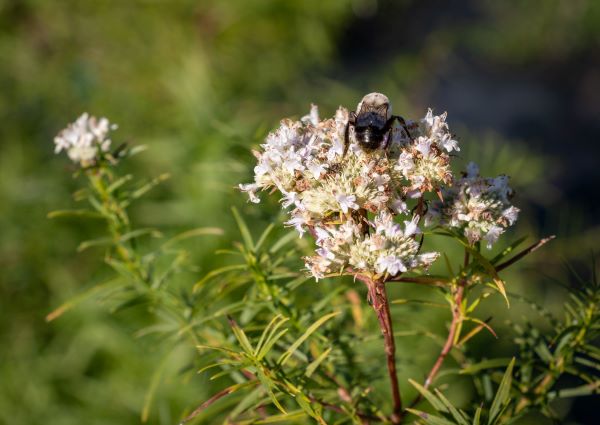 The first packets of native wildflower and grasses seed mix offered for sale through the Virginia Native Seed Project with The Clifton Institute were a big hit, selling out in one day.
But if you missed out, don’t worry, said Rachel Martin, the project coordinator. “We'll have more after our seed harvests this fall.”
Since the first phase began in 2022, eight Virginia farmers were brought on as seed producers in an initiative to jumpstart a new industry to meet the increasing demand for Virginia-grown seeds of native wildflowers and grasses.
Currently, only a few seed companies produce and sell large quantities of native plant seeds commonly found in Virginia. An even fewer number of these companies are able to source their seeds from the appropriate ecoregion where the seeds will be planted. The goal of the Virginia Native Seed Project is to help address this problem by supplying local ecotype seed to restore ecosystems at an economically viable scale.
For the initial grant period, DCR partners also included Virginia State University and Ernst Conservation Seeds. The project is currently working with Roundstone Native Seed in Upton, Kentucky, and future harvested seed will be conditioned, cleaned and sold through them.
Proceeds from the sale of the initial seed packets will go toward covering the upfront investments of the farmers.
In addition to harvesting more seeds from the farmers this fall, Martin said two additional farmers in the Coastal Plain are now on board and will plant new seed increase plots, while volunteers will collect wild seeds in that region.
For anyone interested in collecting seeds, visit The Clifton Institute’s website to fill out a volunteer application form: https://cliftoninstitute.org/restoration/virginia-native-seed-pilot-project/.
For landowners interested in becoming seed producers, reach out to Martin at rmartin@cliftoninstitute.org.
The Clifton Institute recommends a seeding rate of 10 pounds per acre, with 25% grass composition.
Their Piedmont meadow seed mix, sized for a 100-square-foot area, includes Maryland golden aster, upland ironweed, calico aster, narrow-leaf mountain-mint and gray goldenrod – all of which are native to Virginia and contain genetics from these Environmental Protection Agency Level III ecoregions: 45e, 64a, 64b and 64c. It also includes little bluestem and purpletop grasses.
Optimal seeding time is before June 1 or after Oct. 1. For the best results, seed should make contact with bare soil. Over the two years following the seeding, the area should be monitored and managed for unwanted species.
To join the waitlist for purchasing seeds, please fill out this form.
Categories
Conservation | Native Plants | Natural Heritage | Nature
Tags
native plants | pollinator