Department of Conservation and Recreation
Conserve. Protect. Enjoy.
Department of Conservation and Recreation



When DCR marks its 100th anniversary, one of its most influential divisions is celebrating its own milestone. The Virginia Natural Heritage Program turns 40 this year – a moment that traces back to a rented van, a handful of scientists and a bold idea about how to protect the state’s most valuable natural resources.
At the center of that story is Michael Lipford, the program’s founding director.
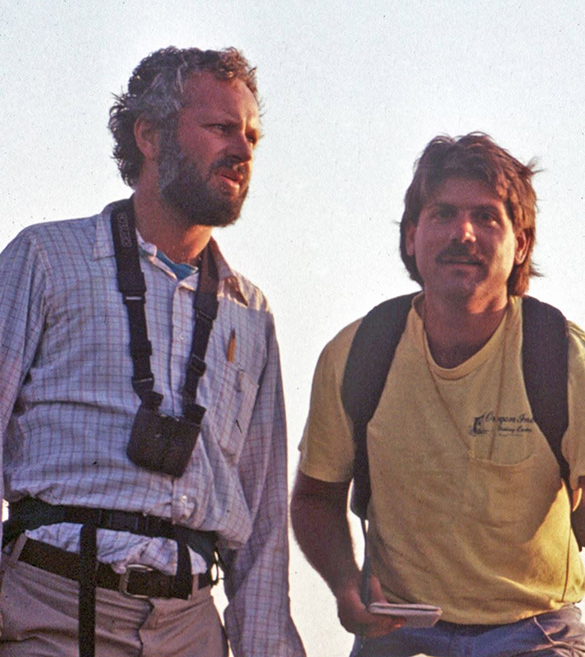
Zoologist Chris Pague (left) and Natural Heritage Program founding director Michael Lipford.
“This program inventories some of the most significant natural resources on the landscape,” he said. “And it categorizes them in a database that can be used for everything from environmental review to land conservation.”
That deceptively simple mission – document, understand and protect – has shaped how Virginia balances growth with conservation for four decades.
The Natural Heritage Program’s roots stretch back to the environmental awakening of the 1970s, when landmark legislation such the Clean Water Act and Endangered Species Act created an urgent need for better ecological data.
The model came from The Nature Conservancy, a nonprofit that pioneered a data-based approach to land protection. Instead of reacting to threats, the organization sought to identify the most critical resources first. “They wanted conservation grounded in science,” Lipford said.
After a stint teaching environmental science, Lipford joined the effort as an ecologist. What began as a two-year, jointly funded experiment between the state and the nonprofit came with significant pressure.
“We had to prove ourselves,” said Lipford, who spent time at The Nature Conservancy’s Northern Virginia headquarters – where initial database records were housed – for orientation. “We were literally under contract to show our worth.”
That proof came through constant reporting, collaboration across agencies and, most importantly, results.
In 1988, the program became permanent through the Virginia Natural Area Preserves Act, which was legislation Lipford helped write, and Virginia became the 43rd state to adopt the model. Around the same time, agency leadership created the Division of Natural Heritage in DCR with five employees and Lipford as director.
And he then transported the program’s earliest data – maps, files and species records – from Arlington to Richmond. “I drove that database in a rented van,” he recalled.
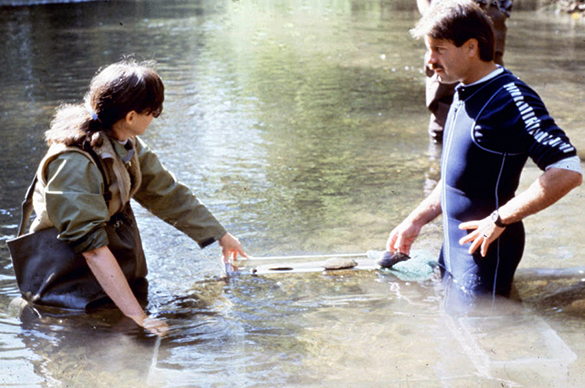
The program’s guiding principle is both poetic and precise: Protect “the last of the least and the best of the rest,” as Lipford explained.
That means first identifying the rarest 20% of species in the state and the highest-quality examples of common habitats, then ensuring that pristine lands from tidal marshes to longleaf pine forests are preserved. Over time, those efforts expanded into a network of Natural Area Preserves, which are lands either owned by the state or protected through conservation easements.
What began with a few sites has grown to nearly 70 preserves across Virginia today.
The program’s earliest successes came quickly and across multiple fronts. Its detailed, site-specific data transformed environmental review in Virginia, giving state agencies critical information needed to assess development impacts with precision.
At the same time, the team helped secure state protections for rare plant species and conducted groundbreaking inventories for local governments including Virginia Beach and James City County, helping them plan growth responsibly.
Partnerships also played a critical role, highlighted by its collaboration with the Nature Conservancy that combines public investment with private conservation expertise.
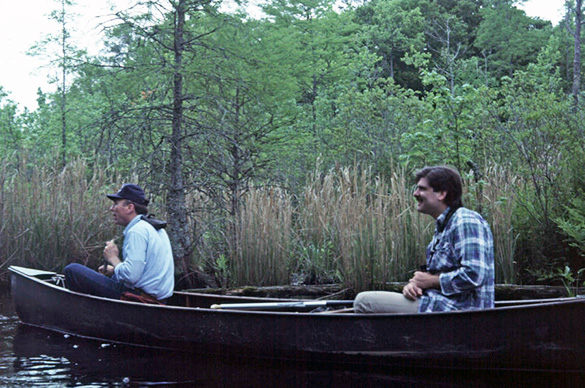
Some of the program’s most meaningful victories are measured in acres. Others are measured in inches.
Lipford points to the protection of a tiny Giles County habitat for the Peter’s Mountain mallow, one of North America’s rarest plants, as just as significant as large-scale land conservation.
On the other end of the spectrum, collaborative efforts helped restore the habitat for the endangered red-cockaded woodpecker, expanding protected land in Sussex County from a few acres to nearly 6,000.
And along Virginia’s Eastern Shore, the designation of Wreck Island helped safeguard one of the Atlantic’s last undeveloped barrier island systems, preserving an ecological buffer, research site and haven for wildlife.
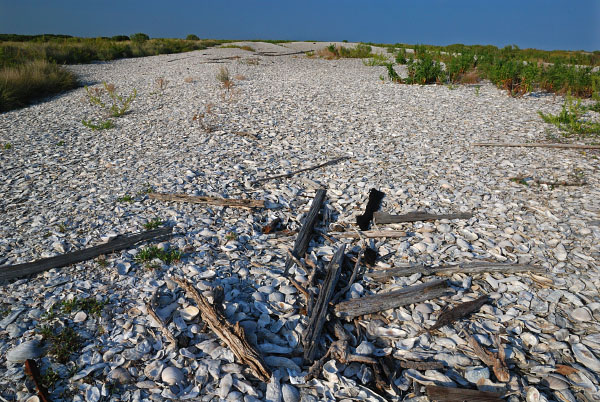
Wreck Island
Lipford led the program for six years before continuing his conservation career with The Nature Conservancy and later returning to state service. Today, Virginia’s Natural Heritage Program employs more than 70 people and is recognized as one of the strongest programs of its kind.
But for Lipford, the work is far from finished due to increasing development pressures and the need for sustainable solutions.
“For all the reasons it was important then,” he said, “it’s as or more important now.”
Categories
Natural Heritage