Department of Conservation and Recreation
Conserve. Protect. Enjoy.
Department of Conservation and Recreation



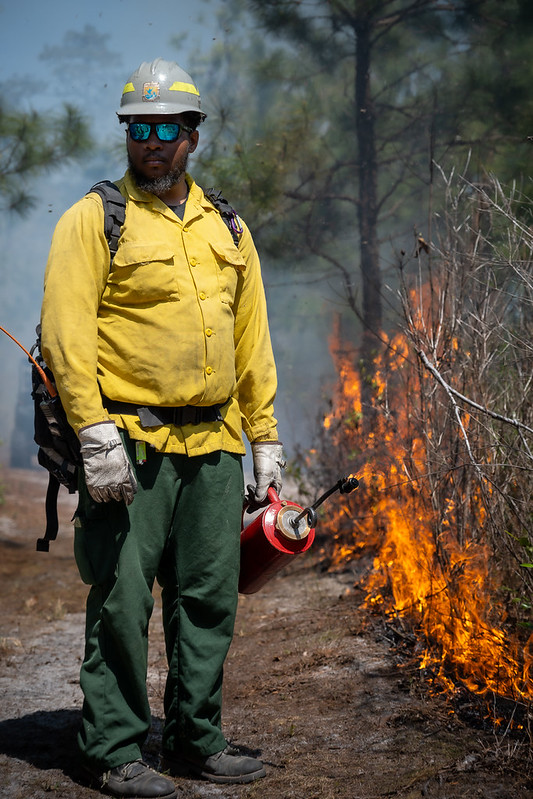
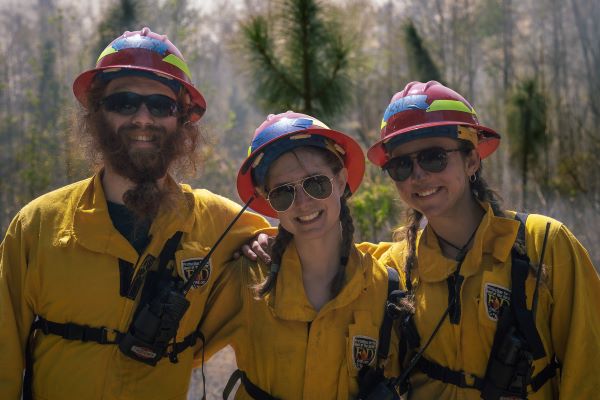 Instead of cracking open textbooks or peering into microscopes, three College of William & Mary seniors spent an April day in their final semester carrying drip torches and scattering flaming fuel as part of a prescribed fire crew at South Quay Sandhills Natural Area Preserve.
“I love it,” said Kyla Henty, dressed like the rest of the fire specialists in bright yellow protective gear and a hard hat, face smudged with smoke. “It’s so fun. It’s so much better than class.”
DCR, as one of several natural resource agencies and organizations that have been restoring fire back to the landscape, is helping to train the next generation of fire specialists by providing internship opportunities with partners in higher education.
At South Quay Sandhills and other preserves, the Virginia Natural Heritage Program at DCR uses prescribed fire as a management tool for habitat for rare species of plants and animals associated with frequently-burned longleaf savannas. Prescribed burns also help prevent dangerous and damaging wildfires by safely reducing the amount of dead vegetation and woody materials that would fuel them.
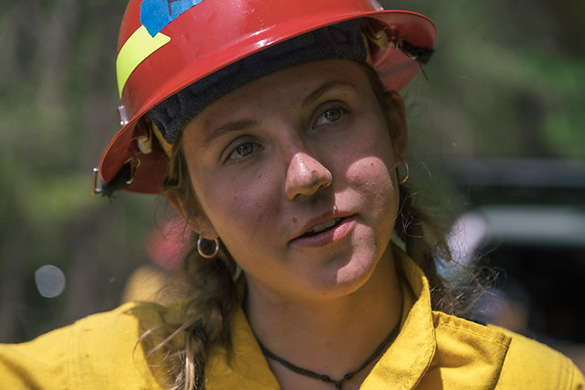
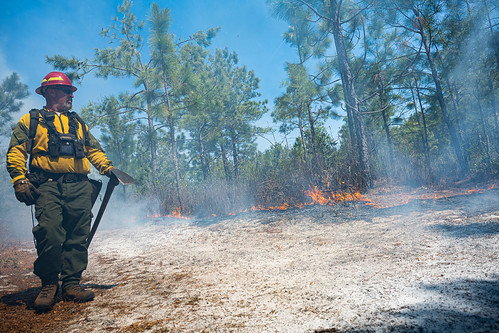
Steve Hubner, a prescribed fire specialist with DCR, has been organizing efforts to provide on-the-ground experience for students at Old Dominion University and William & Mary while earning college credits.
The interns must become qualified as firefighters, obtaining the training required under federal guidelines. That includes field experience and passing an arduous duty pack test: being able to walk with a 45-pound load for 3 miles within 45 minutes.
Going from studying lessons to stepping out onto the field is a steep learning curve.
“We’re taught to not play with matches,” Hubner said. “When they light the first drip torch, you can see them shaking a little bit, they might jump back. The first couple of days, there’s a lot of trepidation.”
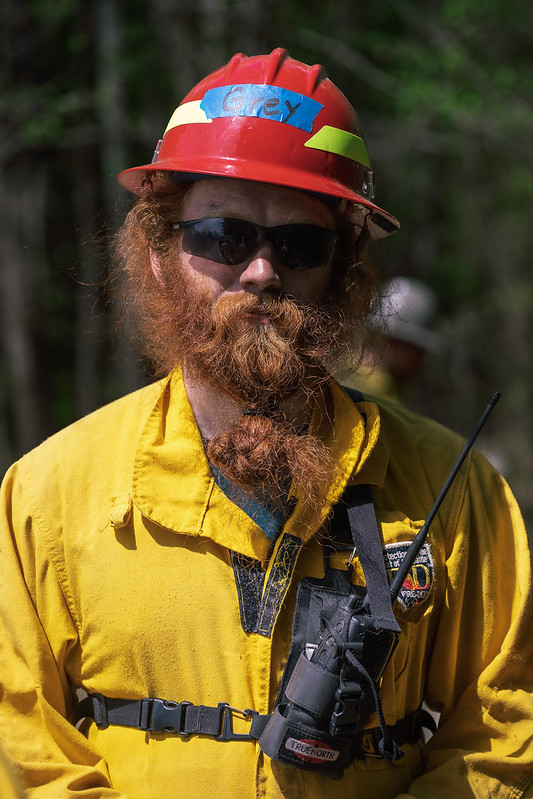
On his first burn, Grey Muldrow said he learned about heat exhaustion – the hard way. “Even if it’s a 70-degree day, it’s a 100-degree day if you’re hanging out right by the fire the whole time,” he said, adding that he was glad his squad boss promptly pulled him off the line to recover and that the rest of the crew was so supportive.
Muldrow, now pursuing aerospace engineering in graduate school, said he is also keeping wildland fire in mind as a possible career. “Fire is a community that, based on my admittedly brief experience with it, truly values the sharing of knowledge,” he said. “Everyone on our burns specializes in something different, and everyone is seeking to learn from everyone else.”
For Charlotte Toomey, while putting fire on the ground was exciting – making sure it was done safely was, too.
She got to drive an ATV carrying a hose and water to combat small “spotfires” that started when the fire went outside the designated burn area. “It really made me feel like a real firefighter,” she said. “I got a rush of adrenaline when I saw my first spotfire and when I put it out, I felt truly important to the team. Ignition is cool, but keeping the operation safe and being a lookout for my peers was amazing.”
As far as Hubner is concerned, the interns are treated as state agency employees. "They need to come to work on time, have their gear, understand what they have to do.”
As the interns gain more experience, Hubner said he gives them additional responsibility, under his supervision, to make decisions. “That’s where they really hit the ground and get independence.”
Toomey, now pursuing a career in wildlife conservation, said she appreciated that space to learn as part of what Hubner taught her about leadership. “Being a good leader is not just being decisive and giving orders,” she said. “It's investing in and trusting your teammates to create a strong morale and get all the perspectives on a situation to find the best approach to the operation.”
Rebecca Wilson, longleaf pine restoration specialist and Eastern fire manager for Natural Heritage, said the interns have played a critical role and added to the success of the mission.
“Prescribed fire takes a lot of strong hands, and the interns are as much a part of the crew as salaried employees,” she said. “We depend on the commitment, dedication and skill of these students to expand our capacity and get more work done on burn days. It’s a classic win-win situation.”
Hubner said the work experience helps the students stand out among their peers, allowing them to demonstrate skills such as following the chain of command and understanding safety protocols.
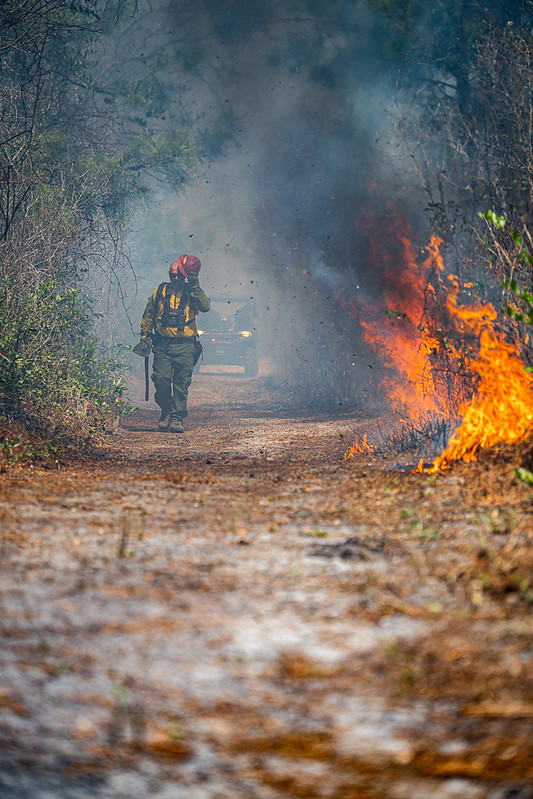
The collaborative nature of prescribed fire crews means the students gain valuable insights beyond learning about DCR and the Virginia Natural Heritage Program. “We burn with all these other agencies: Department of Wildlife Resources, Department of Forestry, The Nature Conservancy, U.S. Fish and Wildlife Service,” he said. “We burn on all these partner lands.”
That exposure can even help give interns an edge when applying for jobs, he said.
Hubner, formerly of the U.S. Fish and Wildlife Service and the U.S. Navy, brings decades of experience in wildland firefighting and prescribed fire across the country. “I’m a big believer in public service. This really helps them get in.”
Categories
Conservation | Land Conservation | Native Plants | Natural Heritage | Nature
Tags
ecosystem | native plants | natural area preserves | prescribed burns