Department of Conservation and Recreation
Conserve. Protect. Enjoy.
Department of Conservation and Recreation



As the Virginia Natural Heritage Program celebrates its 40th anniversary this year, staff have been hosting special events at natural area preserves they manage, and at other locations where they can show visitors examples of the natural heritage resources the program protects.
In May, field zoologist Ellison Orcutt led a group to tour a large colony of digger bees (Anthopora abrupta) at Belle Isle in James River Park in Richmond, Virginia. They are one of five species in the genus known to Virginia. There are more than 450 native bee species in the state. Here are his answers to questions about these digger, or miner, bees.
They’re generally not aggressive and don’t pay much attention to humans. The females do have stingers but if you are holding or stepping on them, they are more likely to attempt to bite you than sting you. But they don’t have much biting power.
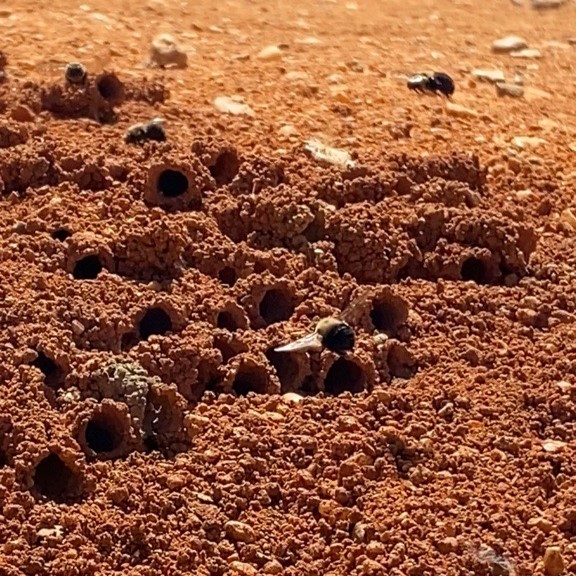 Why do they dig tunnels outside their nests?
We’re not sure. One theory is that it helps keep rain out of their nests, which are dug about 5 inches below the surface. Another is that it may aid in thermoregulation of the nest cavity.
These bees are actually solitary, and each one digs and takes care of its own nest. They don’t work with or help each other in any direct way. Groups, some large, aggregate where the conditions are suitable and the habitat is good for them: bare dirt they can dig, rather than grass or vegetation.
Honeybees and bumble bees are the only true colonial nesting bees in Virginia. Technically referred to as “eusocial” species, they live in colonies with division of labor and reproductive responsibilities.
The single best way to protect pollinators is to protect habitat. Diverse native plant species and intact ecological communities are key to pollinators. Support the groups that do that work. If you want to make a difference in your backyard — literally — plant natives, remove pesticides and embrace a little chaos.
Interested in joining the search for the endangered Rusty-patched bumble bee at Virginia's newest state park? Sign up for the Bumble Bee Blast event at Hayfields State Park in July.
Categories
Conservation | Native Plants | Natural Heritage
Tags
native plants