Department of Conservation and Recreation
Conserve. Protect. Enjoy.
Department of Conservation and Recreation



From sketchbooks to state parks, Danette Poole always saw the world through the eyes of an artist.
As a Virginia Commonwealth University art student in the 1970s, she imagined a career creating exhibits for national parks. She worked summer jobs at Virginia State Parks, including Seashore State Park, now known as First Landing in Virginia Beach, to pay her way through school.
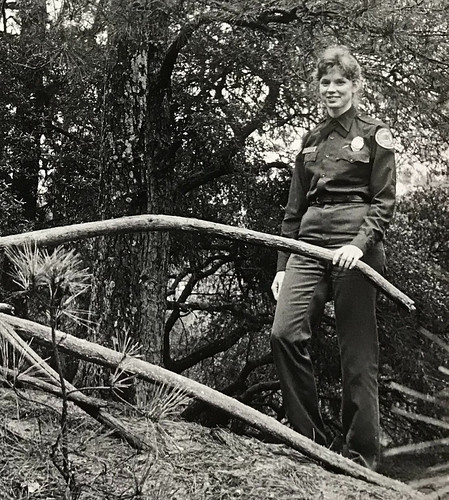
As it turned out, Virginia State Parks became her life’s work.
Over a career that stretched nearly 45 years, Poole rose from seasonal interpreter to director of DCR’s Division of Planning and Recreation Resources. As she advanced into leadership roles, she found herself contributing to everything from park master plans and developing greenways and trails to the Virginia Outdoors Plan and conservation initiatives that still guide the Commonwealth today.
And she guided the parks through some of the most transformative decades in DCR history.
“When I first started, there was a focus on getting people to come to parks,” she said. Before too long, however, “parks started to become loved to death.”
Virginia’s growing population was putting greater pressures on outdoor recreation areas, forcing the state to strike a balance between public access and resource protection. Poole said the agency increasingly recognized that conservation depended on helping people build personal connections with native plants, wildlife and ecosystems and their diversity from park to park.
That fundamental philosophy of “parks are for people” was rooted in interpretive programming, starting with nature walks and extending into historic demonstrations and educational experiences that encouraged visitors to see parks as more than just places to picnic or camp.
Poole points to Freeman Tilden, known as the father of modern interpretation, and how he approached writing about the national parks: “Through interpretation, understanding. Through understanding, appreciation. Through appreciation, protection.”
Poole adopted that mindset, which was pivotal as DCR experienced enormous change during the 1980s. State government reorganizations merged agencies and expanded DCR’s responsibilities, while the state park system underwent explosive growth. While the single major addition then included 57 miles of donated abandoned railway in Southwest Virginia, most investments focused on infrastructure, including roads, campgrounds and more – supported by the U.S. Land and Water Conservation Fund.
For three decades, Poole advanced through the system, becoming the state’s first female superintendent when she was assigned to York River State Park. She then moved to False Cape State Park, 4,300 acres south of Back Bay National Wildlife Refuge; barricades at the border prevented vehicular traffic from North Carolina. Park access was open to those on foot, bike or paddle craft.
Previous leaders at the two protected sites had agreed on limited access through the refuge for the one-time construction and ongoing refueling of gasoline tanks at the park. Poole arrived as leadership changes occurred at the refuge, and her new counterpart suspended that agreement. At the conclusion of one particularly tense phone conversation,, Poole recalled slamming down the phone, then leaving the park office to take a much-needed run. She ran to the park’s highest spot.
“I got to the top of that dune, totally exhausted, and I sat down and said, ‘Why do I do this job?’’ she said. “And I looked down to the south. All I could see was unspoiled beach, unspoiled maritime forest and Back Bay.”
She turned to the north and found the same pristine view. “And I thought, ‘It’s for the people,’” Poole said. “That’s why I do this, because this park is for people.”
Her tenacity turned out to be a pivotal point, after her federal peer backed down when she threatened to bring the issue to court.
Next, at what is now Chippokes State Park, one of Virginia’s oldest continuously farmed properties in Surry County, Poole found herself defending the park’s historic integrity during debates over future development. When an ambitious proposal envisioned restaurants and large-scale attractions in the park’s historic core, she pushed back. “When you look out the mansion window and see a view that hasn’t changed in 400 years,” she said, “I think we have a responsibility to protect that. That’s our conservation mission.”
That experience reinforced for her the importance of long-range planning and conservation protections – work that became central to her leadership role at DCR. In overseeing updates to park master plans and the Virginia Outdoors Plan, a five-year roadmap for recreation and conservation priorities to meet eligibility for federal funds, Poole traversed the state for public meetings to hear what local communities wanted from their parks.
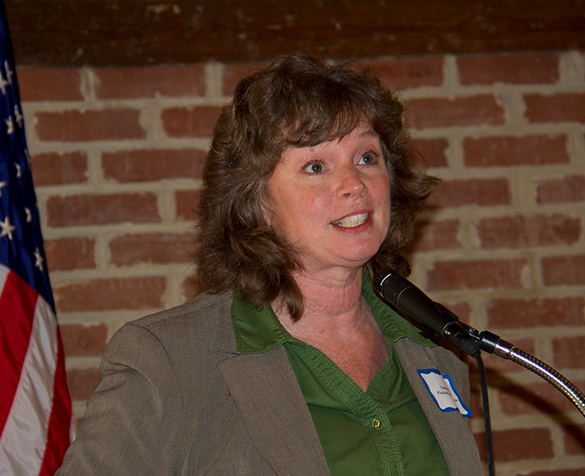
“Conservation wasn’t just about protecting land. It was about helping people connect to these places in a way that made them want to protect them too,” she said. “People appreciated having a voice in shaping these resources.”
Poole also saw how conservation increasingly intertwined with economic development and quality of life. Trails, greenways and public access to waterways consistently ranked among Virginians’ top outdoor priorities in statewide surveys.
During her leadership of the Planning and Recreation Resources Division, one design and construction project particularly stands out: reconstruction of the High Bridge at High Bridge Trail State Park. Hovering 125 feet above the Appomattox River, the former railroad bridge was transformed.to become the pinnacle of a 30-mile multiple-use trail. The bridge construction required major engineering ingenuity, including widening it to safely accommodate cyclists, walkers and horseback riders. “The view from the bridge is breathtaking,” Poole said. “You can see distant landscapes for miles from up there.”
Yet for all the planning documents, construction projects and statewide initiatives, Poole returns to her days at Seashore for what became one of her proudest moments. Unfortunately, without staffing funds to support park operations during the off season, the park would close after Labor Day.
Community members stepped forward with an idea to deploy volunteers. More than 100 people showed up after the park announced it was accepting volunteers. Retirees staffed the visitor center. Navy personnel cleaned restrooms and maintained trails. What began as an emergency solution quickly became the foundation of Virginia State Parks’ volunteer system.
“That community engagement became one of the most important things we ever did,” Poole said. “It taught me just how deeply communities value these places when they feel connected to them.”
Now retired, Poole still sees conservation as a deeply personal mission. She advocates for native plants and continues encouraging younger generations to connect with the outdoors.
“We care about the things we relate to,” she said. “If children are encouraged to play in nature and experience it for themselves, they’re much more likely to value it later in life.”
Categories
Recreation Planning