Finding Kilroy in the CCC archives
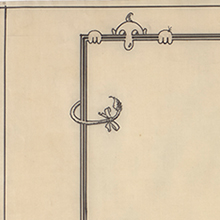
Fairy Stone State Park, master plan
If you thumb through the thick sheets of blueprints for the Virginia State Parks built by the Civilian Conservation Corps, you will inevitably lock eyes with a small figure peering up at you from the top corners of the pages. A drawing of a bald man (sometimes graced with a strand of hair or other accessories) peers cautiously over an edge, his fingers and nose hanging over. Known to Americans as “Kilroy,” he is a figure of international renown and is most popular for his appearances in World War II as graffiti or as a symbol on military equipment (O’Gorman 1994). However, his presence on CCC blueprints before the US joined World War II raises questions about where and when “Kilroy” first appeared.
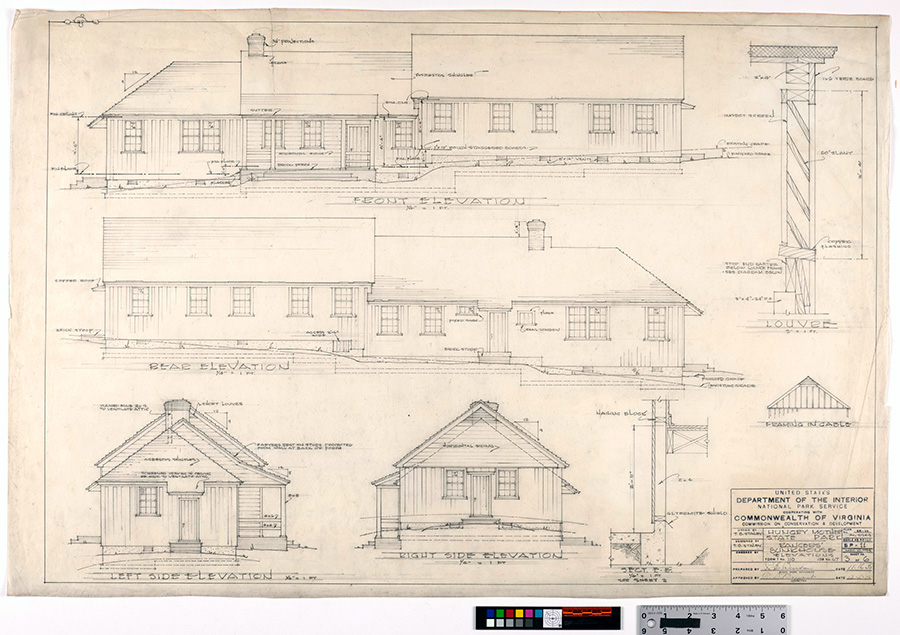
Blueprint of the ranger bunkhouse at Hungry Mother State Park. Kilroy in the top left corner.
The origins of Kilroy are murky. While the little figure has other names across the world, the most well-documented doppelganger appears in the UK. Referred to as “Chad” or “Mr. Chad,” the UK doodle is also seen in similar contexts during World War II (BBC - WW2 People's War - "Mr. CHAD"). Because of this, some think that Kilroy is an Americanized version of Chad and these similar figures.
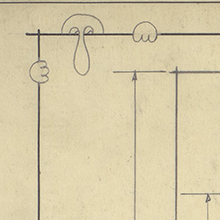
Seashore (First Landing) State Park, latrine sewage disposal
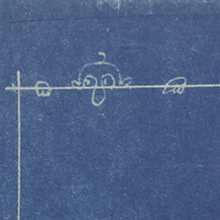
Fairy Stone State Park, barn/riding stable
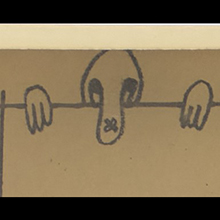
Fairy Stone State Park, barn/riding stable
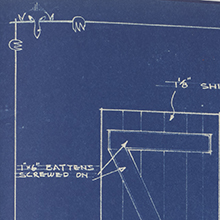
Fairy Stone State Park, barn/riding stable
Often, the World War II graffiti was joined by the phrase “Kilroy was here.” The phrase is credited to shipyard inspector James J. Kilroy, who wrote the phrase to mark his inspections on parts of naval ships during World War II (Skilling 1963: 276). In this context it was unaffiliated with the drawing of Kilroy. Likely, the phrase and drawing were associated together by American soldiers overseas throughout the war, leading to the doodle being named “Kilroy.” To date no such phrases are found on Virginia’s CCC drawings, but the likeness of the figure is identical to the World War II symbol. Our Kilroys predate the American presence in World War II, so where does he actually come from?
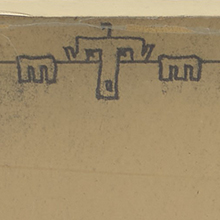
Fairy Stone State Park, barn/riding stable
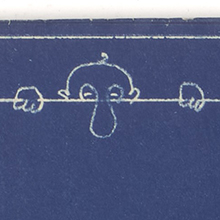
Fairy Stone State Park, barn/riding stable
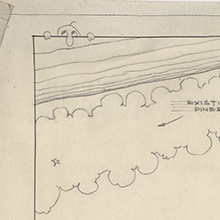
Fairy Stone State Park, bathouse
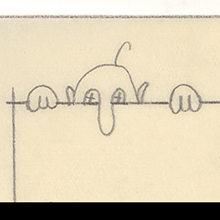
Seashore (First Landing) State Park, beach latrine
Construction on the parks began in the early 1930s, and in June 1936, Virginia became the first state to open an entire system at once. The Virginia State Parks’ CCC archives contain blueprints and drawings dating to the 1930s and early 1940s. Not every map in the collection has Kilroy peeking from the upper corners, but some patterns around his presence are seen from our most recent inventory of CCC materials from Douthat State Park.
For instance, of the 481 scanned materials from Douthat, 37 include a version of Kilroy scrawled in the top left corner (or 8% of the collection). Plans from the other CCC state parks show a similar pattern: Fairy Stone (10%), Hungry Mother (10%), Seashore (now First Landing, 5%), Westmoreland (2%). Most of these plans are by architects Thomas B. Staley, Edward Meyers Jr., or a collaboration between the two from 1938-1940. Kilroy only appears in park collections in which they were both working. For example, Meyers designed several buildings at Staunton River, but Staley’s name does not appear on any of the drawings, nor does Kilroy.
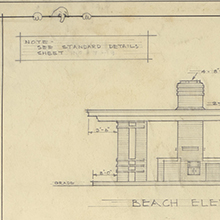
Seashore (First Landing) State Park, cooking shelter
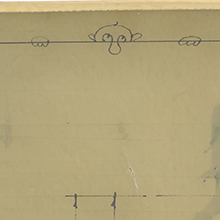
Seashore (First Landing) State Park, rangers bunkhouse
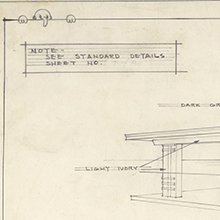
Seashore (First Landing) State Park, double fireplace shelter
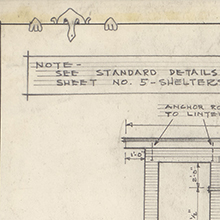
Seashore (First Landing) State Park, beach latrine
Staley and Meyers were classmates from the University of Virginia, where both graduated in 1936. Notably, contributions from the other architects and designers throughout the collection do not feature Kilroy. This, as well as the variations of Kilroy on the plans between Staley and Meyers indicate a kind of inside joke between the two not found on the work from other park architects. This speaks to Kilroy’s popularity as a cultural symbol—showing the humor and personality of some of Virginia State Parks’ architects that have remained for nearly 100 years (Virginia State Parks 2025).
While the origins of Kilroy are still unclear, his popularity as an “Everyman” is well-established in the appearances of the figure and phrase in pop culture following its use as a wartime symbol (Donahue 1964: 64; Sterba 1948). The “Everyman” refers to a character or figure that is relatable to the public. Often it represents the commonality felt between people. This aligns with the population of CCC workers, who were young men deeply affected by the Great Depression. The population of drafted soldiers during World War II again reflected these demographics (O’Gorman 1994). These were members of the broader public, whose names rarely made it to a national stage and as such left their individual contributions, sacrifices, and presences under-recognized. When considered as an “Everyman” symbol, Kilroy was not just a recognizable cultural motif among individuals in the 1930s and throughout World War II but was a way to make a mark; a way to say, “we were here.”
References
BBC. “Mr. CHAD.” WW2 People’s War, Internet Archive. Accessed March 5, 2026.
https://web.archive.org/web/20100307235300/http:/www.bbc.co.uk/ww2peopleswar/stories/19/a3568719.shtml
Donahue, Francis. The Dramatic World of Tennessee Williams. New York: Ungar, 1964.
O’Gorman, Tim. “Kilroy Was Here.” Army History, no. 30 (1994): 19–21.
Skilling, Charles. “Kilroy Was Here.” Western Folklore 22, 4 (1963): 276–77.
Sterba, Richard. “KILROY WAS HERE.” American Imago 5, 3 (1948): 173–81.
Virginia State Parks. “Architects.” The Civilian Conservation Corps at Westmoreland State Park. ESRI StoryMap. August 2025. Accessed April 8, 2026. https://arcg.is/1K8mvv1