Read Our Blogs
A Virginia State Parks road trip for Black History Month
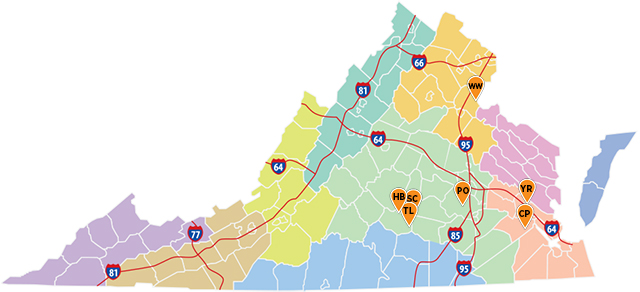
Take a trip across the state with a focus on Black history. February is Black History Month, and our parks are offering programs, events, displays and ranger-led tours to share history across Virginia State Parks. Take advantage of this opportunity to learn, remember, honor and celebrate Virginia's Black history. This road trip covers seven Virginia State Parks, starting in central Virginia, then going toward the Chesapeake Bay and up to Northern Virginia, and would take a total of nearly 6 hours driving time. Find Google Maps directions for the whole route here. Three of the parks offer overnight accommodations, so you can drag out the trip or take it in sections.
High Bridge Trail State Park

Starting at High Bridge Trail State Park, visit High Bridge Station to learn about the bridge's Civil War history before hitting the trail for a walk or bike ride.
More learning in Farmville:
Visit nearby Robert Russa Moton Museum.
Participate in a Civil Rights Walking Tour of Farmville.
Read about the historic photo of High Bridge Watchman Uncle John.
Twin Lakes State Park
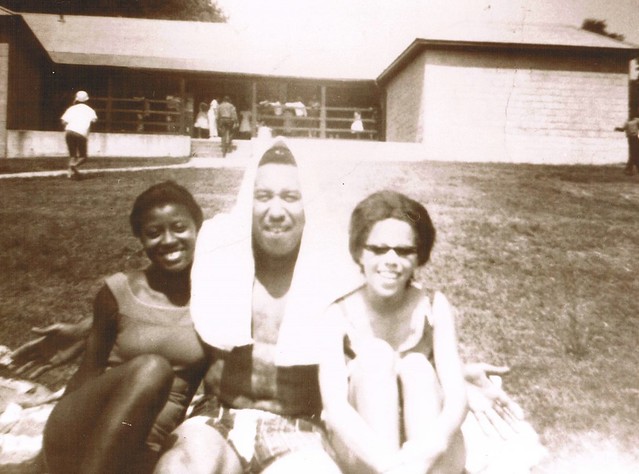
Take a quick drive (20-30 minutes, depending on where you park at High Bridge Trail) over to nearby Twin Lakes State Park to learn about the outcome of a suit to establish “separate but equal” facilities. Developed in 1950, Prince Edward State Park was the only state park for African Americans in Virginia. The two parks, Goodwin Lake and Prince Edward Lake, ran as two racially segregated parks until they merged in 1976. Join us for History Hour tours on Feb. 7, 15 and 28, to learn about the history of the two lakes. Or take learning outside on a hike for Goodwin Lake Trail Guided Hikes on Feb. 21 and 28.
Stay awhile: Lodging available at Twin Lakes State Park
Sailor's Creek Battlefield State Park
Learn about the active role of African-American soldiers in the American Civil War Appomattox Campaign by traveling 20 minutes north to Sailor’s Creek Battlefield State Park. Attend special educational programs throughout the month: Slavery in Central Virginia on Feb. 1, USTC in the Appomattox Campaign on Feb. 7 and 8, and Self Emancipation During the Appomattox Campaign on Feb. 14 and 15.
After the program, tour the Hillsman House (below), the birthplace of Dr. Robert Russa Moton.

Read about Sailor’s Creek Battlefield's connection to Dr. Moton, a giant of early 20th-century academia.
Pocahontas State Park

Next up, at Pocahontas State Park (an hour drive northeast of Twin Lakes), visit the CCC museum, housed in the original craft building, to see highlights of the Civilian Conservation Corps' many accomplishments in Virginia. Afterwards, enjoy a few of the more than 90 miles of trails.
Stay awhile: Lodging available at Pocahontas State Park
Chippokes State Park

1816 slave quarters at Chippokes State Park. The second oldest slave quarters standing in Virginia.
Travel east to the banks of the James River (about an hour drive), where Chippokes State Park, one of the oldest continually farmed plantations in the U.S., has links to the time of enslavement. Directly across the James River from the first English settlement in the New World, it has been continually farmed since 1619. On Feb. 1, join the Black History Month: Quarter Lane Walking Tour as a ranger shares the history of both enslaved and tenant farmer families of Chippokes.
Be sure to stop by the Chippokes Farm & Forestry Museum to learn about people like Benjamin Hicks, a Virginian born into slavery, who revolutionized peanut farming in the area.
Stay overnight: Lodging available at Chippokes State Park
York River State Park

Park Ranger John Gresham leads a hike at York River State Park.
Take the 30-minute Jamestown-Scotland Ferry to Williamsburg and drive north for an additional half hour to York River State Park, a pristine Chesapeake Bay National Estuarine Research Reserve. At this park, visitors have the opportunity to learn how African slavery began in the Virginia Colony and hear courageous stories of how they overcame challenging terrain to elude their oppressors.
Mark your calendar for the Rebellion & Runaway Walk on Feb. 28.
Widewater State Park

A drive north (2 hours) to Widewater State Park, located on a peninsula where Aquia Creek and the Potomac River meet, offers a treat for art lovers as well as history buffs. Renowned American Artist Palmer Hayden was born in this area, and a historical marker (a short walk from the visitor center) celebrates his life and major contribution to the art world.
Read about the 2020 unveiling of this Virginia Department of Historical Resources marker.
Continue learning
Although Widewater State Park may bring this road trip to an end, it’s just the beginning of the journey. Want to continue? James River State Park offers History Hikes on Feb. 8, 15 and 22, shining a spotlight on the remarkable contributions of African Americans to the area’s heritage. Travel to Green Pastures Recreation Area for Stories of Green Pastures: A Black History Month Hike on Feb. 22.
Also, check out the History of a Pre-Civil Rights Era State Park.
Read about the impact of Maceo Conrad Martin, the civil rights activist who filed a suit after being denied entry to Staunton River State Park due to his race – resulting in Prince Edward State Park.
Learn about the African-American Civilian Conservation Corps, Camp Gallion, responsible for the construction of fire roads and other improvements in this area that became Twin Lakes State Park, by visiting Shelter 2 to find educational plaques. You can also watch a video of the dedication of these plaques for Camp Gallion and member Dr. Rev. John Henry Brown.

Dr. John Henry Brown was honored in Oct. 2021 for being part of the CCC group Camp Gallion to build Twin Lakes State Park. Visit the picnic shelter at Lake Goodwin to find the interpretive signage.
There is much to learn and celebrate during Black History Month across the commonwealth. For more inspiration on exploring the Black history in Virginia State Parks, click here.
If you have read the article and have a question, please email nancy.heltman@dcr.virginia.gov.
Search for blogs
By Park
Categories
Cabins
Camping
Fishing
History and Culture
Other
Programs and Events
Trails
Volunteers
Water Fun
Archive
2026
2025
2024
2023
2022
2021
2020
2019
2018
2017
2016
2015
2014
2012